how to say love you in korean Italian say korean howcast
As we explore the vast and rich world of languages, many of us find ourselves drawn to the beauty, complexity, and uniqueness of Korean. Whether you’re an avid student of the language, a curious traveler, or simply a language enthusiast, you cannot deny the charm and elegance of Korean. And what better way to celebrate the language than by learning how to say the most fundamental expression of affection - “love.” So here we are - ready to dive into the world of Korean expressions of love! We’ve gathered some fantastic resources, including some fun and colorful infographics, and an informative YouTube video to help you pronounce and understand the language correctly. First up, we have a fantastic infographic from Dom and Hyo that not only allows you to learn the word “love” in Korean but also provides a few examples of how to use it in different contexts. The graphic features an adorable couple, one with a heart-shaped balloon, and the other with a sweet message in Korean. The clear and simple design of the infographic makes it easy to understand and memorize the word, even if you’re a beginner. So what is the word for “love” in Korean? It is “사랑” (sarang), pronounced “sah-rang.” With its gentle and mellifluous sound, “sarang” rolls off the tongue with ease and beauty. And just like the word itself, love in Korean culture is all about gentleness, patience, and commitment. Moving on to our second resource, we have a fantastic YouTube video from Talk To Me In Korean. The video features a native Korean speaker who breaks down the pronunciation of “I love you” into three parts - “saranghae” (sarang-hae), “saranghamnida” (sarang-ham-ni-da), and “saranghaeyo” (sarang-hae-yo). The video not only helps you understand the pronunciation but also enlightens you on the context and cultural significance of each expression. “Saranghae” is a more casual expression used between couples, while “saranghamnida” is a more polite expression used towards a person of a higher status. And “saranghaeyo” is the most formal, used in situations such as a workplace or a formal occasion. The video also highlights the importance of context, tone, and body language when expressing affection in Korean. It’s not just about saying the words correctly; it’s about understanding the nuances of the language and culture as well. In conclusion, we hope that our resources have helped you understand and appreciate the beauty and complexity of Korean expressions of love. Whether you’re in a romantic relationship or simply want to express your love to family, friends, or colleagues, knowing how to say “love” and “I love you” in Korean will undoubtedly make your interactions more heartfelt and memorable. So go ahead and impress your loved ones with your newfound Korean vocabulary!
If you are looking for How to Say Love in Korean - Learn Korean with Fun & Colorful Infographics you’ve came to the right page. We have 5 Pictures about How to Say Love in Korean - Learn Korean with Fun & Colorful Infographics like 사랑해 - How To Say I Love You in Korean - Kimchi Cloud, How To Say ‘I Love You’ In Korean - LearnKorean24 and also 사랑해 - How To Say I Love You in Korean - Kimchi Cloud. Read more:
How To Say Love In Korean - Learn Korean With Fun & Colorful Infographics
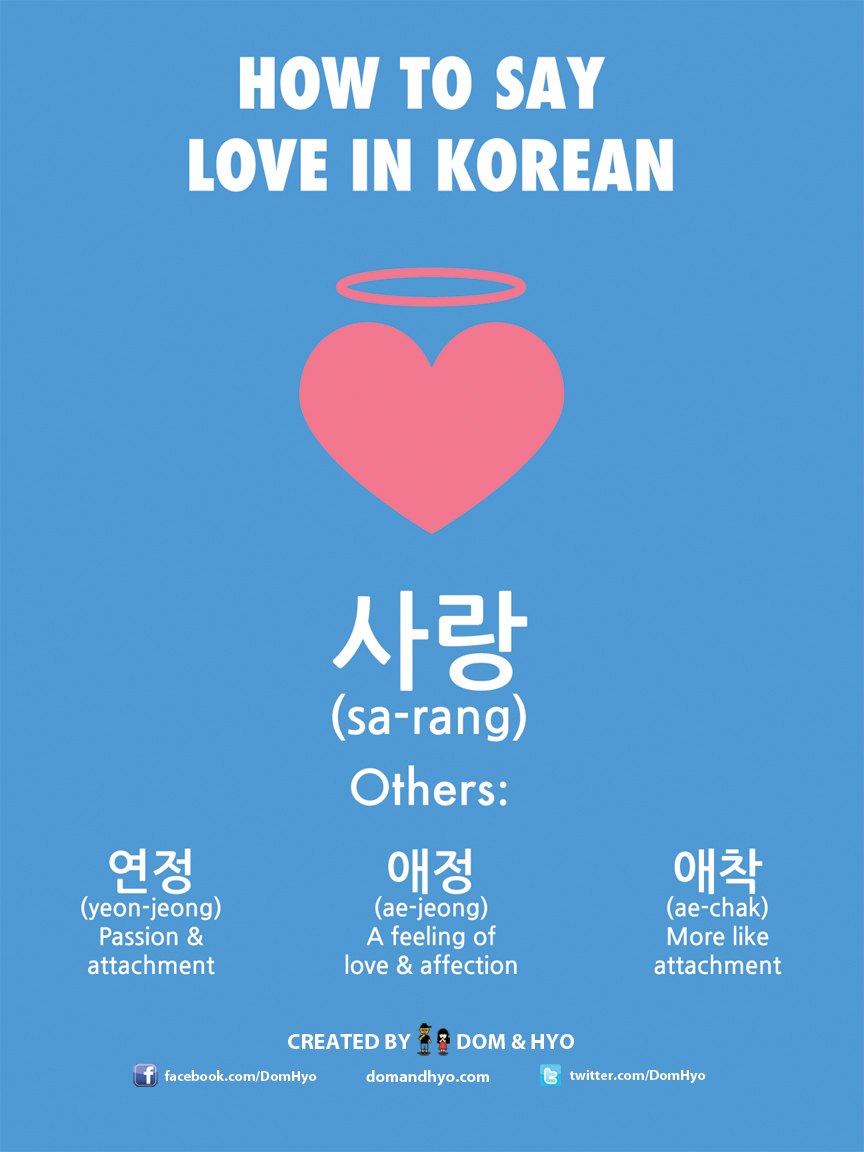 domandhyo.comkorean say words korea language hyo dom learn vocabulary almost domandhyo
How To Say ‘I Love You’ In Korean - LearnKorean24
 learnkorean24.comsay
사랑해 - How To Say I Love You In Korean - Kimchi Cloud
 kimchicloud.comHow To Say “I Love You” | Learn Korean - YouTube
 www.youtube.comitalian say korean howcast
How To Say ‘I Love You’ In Korean
 www.90daykorean.comKorean say words korea language hyo dom learn vocabulary almost domandhyo. How to say “i love you”. How to say ‘i love you’ in korean